What's new

Vehicle recovery gear and tips

That is a very interesting opinion on the KO2 being too stiff in cold weather. True that I don't have to worry about freezing weather in the desert but I get around. I also spent 15 years living 7,000 feet in a Rocky Mountain community with an annual snowfall average of 300 inches per year. I never heard of such a thing as cold weather stiffness affecting traction. Not disputing his expierience with the KO2 but wondering if it could be something other than "cold weather stiffness"? Thirty five inch tires put a lot of rubber on the ground. More contact more traction. Were his KO2s 35s or did he upgrade in size? Were they all the same load range? Even in extremely cold temperatures it does not take long at all for the weight of a vehicle and pounding rotations to bring a tire up to operating temperature. Not trying to defend BFG at all, but I do doubt his traction difference was due to cold weather performance. Would love to hear from others on this.

VesePilot, you live in those harsh conditions. Internal tire PSI changes with tire temperature. Since the TB monitors PSI in real time I sugest you monitor your own pressure from cold start to operating temperature on the road when they warm up at different outside temperatures. Not exactly scientific but I suspect your not going to see a big difference.

Also, in those conditions you were in for the recovery I would be aired down as low as I could go.

I did not google this subject at all. I may get my opinion handed back to me as very wrong. Speaking from expierience only.

Steve
 
I have an unrelated question to the topic that seems appropriate to this thread title. I was waiting for this convo to play out, but it seems like it's about to heat up so I'm going to jump in with a change of the conversation.

I'm making a tool kit for my truck. As much as I'd like to be able to carry every possible tool made, the truth is I'm limited on what I can carry. Therefore, I'd like to hear from everybody on what size sockets they've actually used when working on their trucks. Off the top of my head I have the following. Please feel to add more.

10mm
13mm
15mm
18mm
21mm
22mm
36mm

I will be adding open end/box combo wrenches with flex heads for the box end in these sizes in case I need to restrain a nut while torquing a bolt. I will not be adding socket wrenches to save on weight and space. I will be using adapters that turn ratcheting wrenches into socket wrenches. They're much smaller and lighter. I'm also considering carrying both deep and shallow sockets in this sizes, mostly impact. I'm already going to carry extensions and flexes in both 1/2" and 3/8" Impact and 1/4" non-impact. I am planning on having an impact driver in the kit with 1 battery and 1 charger.

I know I also need:

Phillips head
flat head
T30
T50 sockets/bits
Breaker bar

This is just the beginning of this tool kit. They're other items I'm not ready to discuss, or already have covered (such as zip ties, wire, Fuses, serpentine belt install/removal tool, Radiator hose clamps, plastic trim tropical tools, etc. This is a much bigger convo than I'm ready to have. I'm just trying to get started at this moment and would like to focus on these areas.
 
Last edited:
Good topic. I deal with this two ways. One: Tools that live in the truck permanatly and are always there. Two: I intentionally seek out back country wilderness so remote I may not see another vehicle for a few days. On remote or multi day overland trips I throw the big heavy well equiped tool box in. Being able to carry the gear I need to have with me is one of the advantages of 4wheeling a full sized rig.

In my under seat storage lives:
standard and metric 1/4 & 3/8 inch drive socket set
basic metric & standard end wrenches
in a small plastic tool box is a very basic assortment of esential tools like screw drivers, pilers etc.
That stuff is always there.

The larger kit I throw in for off road trips is nothing extreme. Just a better tool kit with a larger assortment of hand tools.

Three essentials are: duct tape, zip ties, and most importantly JB Weld.
Anyone with a Trail Boss should never leave pavement without JB Weld and a hammer. Somewhere on this forum I detailed the flawed design of the TB differential cover in great length. Because I happened to have JB Weld in the larger kit I was able to do a self rescue field repair instead of an offroad recovery.

Steve
 
Transient, now you are speaking my language! I have a love/hate/lust relationship with tools, and keep a variety of tools in my truck depending on what I am doing. Depending on where I am going, and what I might come across, I will select various items, but the general purpose MECHANIC tools that go with me in my truck rarely change. I'll take a pictures when I get home, but the tools that rarely come out of the truck include the following:

Milwaukee Packout 1/4 and 3/8 Drive Set (48-22-9846)
It comes in a water proof, slim profile, packout container since its very narrow and can be easily stored out of the way. The other benefit is that one end of each socket is square so that they don't roll and I can use an open end wrench on all of the sockets, even the shallows, if there isn't enough room for a ratchet. The set itself has a lot of versatility.

A waxed canvas wrench roll
It allows me to carry 11 metric wrenches and 11 SAE wrenches which cover the full spectrum of needed wrenches for most tasks. Milwaukee Flex Ratcheting Wrenches don't fit in the roll because the flex heads are too large, so your pretty limited to basic combination wrenches when using a wrench roll. When doing suspension work on the truck, the Flex ratchets shorten down-time significantly so it's always a mental discussion with myself as to whether or not I take them on a trip.

M12 3/8 Ratchet Wrench and M12 3/8 Stubby
If storage area is tight, I leave the stubby at the house, but the 3/8 ratchet always goes since its slim and easy to pack away.

The wrench roll, m12 ratchet, screw drivers, pliers, adjustable wrench, etc. all fit in a Milwaukee Packout Tool Box (48 22-8424) that doesn't take up much room at all.

Something that I never considered until recently is a Foldable Gardening Mat. This is not a must have, but I met a fellow a while back that showed me this and I instantly saw the benefit and I now have one. They are less than $10 on amazon, are fairly robust, and fold up into a rectangle the size of a small pouch for storage. If you have ever dropped a bolt while under your vehicle and can't find it, or need to place a component on the ground while keeping it out of the dirt or mud, then you know why this mat is cheap insurance. Not only that, its great at keeping you out of the mud and dirt if you are working on your truck in a less than ideal environment.
1712244127315.png
 
Great stuff!

I have a couple of suggestions for folks in addition to what's already been mentioned above by people that are probably more experienced than me! Haha :cool: . You can sink the ship with spare parts! Only bring tools you will potentially use... It makes no sense to carry something that will be used to make a repair you don't have the parts for or that is beyond your mechanical knowledge! All my expensive Snap-On Tools stay at home... My travel tools are a combination of Craftsman, Proto, Husky, Icon, Pittsburgh, Gear Wrench, Etc... Some I've purchased new, some used, some were anothers garbage! but all are no great loss if broken, left behind or stolen.

I've put together "modules" with ammo cans. For example:

Tire Kit has small 12v air compressor, plug kit, sidewall patch kit, extra valve stems (that won't work in the TB, but have a good Schrader valve if needed), Schrader valve tool, razor knife, pliers, pressure gauge, LED flash light.

Electrical kit has various gauge wire (including battery cable), battery terminals, fuses, all sizes of crimp connectors, cutters, strippers, crimp tool, butane soldering tool, electrical tape, shrink tubing, various light bulbs... 12v test light(regular and LED), volt meter, cheap Innova OBD II scanner.

I stopped carrying impact tools and swapped out a 3/8 inch socket set for a 1/2 inch socket set (less likely to break) with pipe extension for extra leverage. Pittsburgh cheap impact sockets which can be hammered on to change a U-Joint etc if needed. 1/4 inch socket set has all the allen/torx sizes as well. Good old fashioned wrench sets in tool rolls with various pliers and adjustable wrenches, hammer, bigger hammer, dead blow hammer, chisels and drifts and punches oh my!, large pry bar, screw drivers (cheap ones that I do use as a pry bar or chisel:ROFLMAO:), torque wrench. Lots of duct tape, bailing wire, zip ties, heavy duty 40 gallon trash bags, JB Weld, 5 minute epoxy, wd40, brake cleaner, RTV silicone, stop leak, plumbers torch, hose clamps, bunch of red rags.

When heading out somewhere remote: Gallon jugs of motor oil, coolant and transfluid; 5 gallons of gas and 5 gallons of water. Belts, brake fluid, jump box.

Travel with friends and make sure to communicate who's got what! Not everyone needs to carry a chain saw and a welder... this leaves room for someone to carry an extra cooler of ice and 12v blender🤙.
 
Thanks for everybody's input. Unfortunately, I think we're getting away from my initial question. What size sockets do you recall actually using on your trucks? I'm not looking to be AAA to everybody, and therefore don't need to carry every size made. For example, if I don't need to carry a 16mm socket, I won't. Everybody's point about tarps, wrench rolls, JB Weld, Duct tape, wow, etc are all valid and appreciated, but if the list grows without getting the initial questions answered it'll be difficult, if not impossible, to make progress on it. I do have my garage tools that'll stay in the garage. I'm focused on what I need to get me home to my garage.

As for spare parts, I'll work on that later. I am keeping an eye on things like u-joints, etc, but having them won't do me any good if I don't have the tools to remove and replace because I'm carrying a bunch of tools I don't/won't need. One thing I am presently doing in this category is holding onto spare nuts and bolts. For example, I installed the ReadyLift 2" SST kit on my truck last week. Instead of throwing away the nuts and bolts that got replaced by the kit I have held on to them and placed them in a baggy that's now stashed under my back seat.
 
Great stuff!

I have a couple of suggestions for folks in addition to what's already been mentioned above by people that are probably more experienced than me! Haha :cool: . You can sink the ship with spare parts! Only bring tools you will potentially use... It makes no sense to carry something that will be used to make a repair you don't have the parts for or that is beyond your mechanical knowledge! All my expensive Snap-On Tools stay at home... My travel tools are a combination of Craftsman, Proto, Husky, Icon, Pittsburgh, Gear Wrench, Etc... Some I've purchased new, some used, some were anothers garbage! but all are no great loss if broken, left behind or stolen.

I've put together "modules" with ammo cans. For example:

Tire Kit has small 12v air compressor, plug kit, sidewall patch kit, extra valve stems (that won't work in the TB, but have a good Schrader valve if needed), Schrader valve tool, razor knife, pliers, pressure gauge, LED flash light.

Electrical kit has various gauge wire (including battery cable), battery terminals, fuses, all sizes of crimp connectors, cutters, strippers, crimp tool, butane soldering tool, electrical tape, shrink tubing, various light bulbs... 12v test light(regular and LED), volt meter, cheap Innova OBD II scanner.

I stopped carrying impact tools and swapped out a 3/8 inch socket set for a 1/2 inch socket set (less likely to break) with pipe extension for extra leverage. Pittsburgh cheap impact sockets which can be hammered on to change a U-Joint etc if needed. 1/4 inch socket set has all the allen/torx sizes as well. Good old fashioned wrench sets in tool rolls with various pliers and adjustable wrenches, hammer, bigger hammer, dead blow hammer, chisels and drifts and punches oh my!, large pry bar, screw drivers (cheap ones that I do use as a pry bar or chisel:ROFLMAO:), torque wrench. Lots of duct tape, bailing wire, zip ties, heavy duty 40 gallon trash bags, JB Weld, 5 minute epoxy, wd40, brake cleaner, RTV silicone, stop leak, plumbers torch, hose clamps, bunch of red rags.

When heading out somewhere remote: Gallon jugs of motor oil, coolant and transfluid; 5 gallons of gas and 5 gallons of water. Belts, brake fluid, jump box.

Travel with friends and make sure to communicate who's got what! Not everyone needs to carry a chain saw and a welder... this leaves room for someone to carry an extra cooler of ice and 12v blender🤙.
Love this. I didn't know the TB came in a 1 ton. You must have one to carry all that. :D And with the price of ammo it cost a fortune to buy those containers!
 
Love this. I didn't know the TB came in a 1 ton. You must have one to carry all that. :D And with the price of ammo it cost a fortune to buy those containers!
You can find empty ammo cans for cheap
 
Thanks for everybody's input. Unfortunately, I think we're getting away from my initial question. What size sockets do you recall actually using on your trucks? I'm not looking to be AAA to everybody, and therefore don't need to carry every size made. For example, if I don't need to carry a 16mm socket, I won't. Everybody's point about tarps, wrench rolls, JB Weld, Duct tape, wow, etc are all valid and appreciated, but if the list grows without getting the initial questions answered it'll be difficult, if not impossible, to make progress on it. I do have my garage tools that'll stay in the garage. I'm focused on what I need to get me home to my garage.

As for spare parts, I'll work on that later. I am keeping an eye on things like u-joints, etc, but having them won't do me any good if I don't have the tools to remove and replace because I'm carrying a bunch of tools I don't/won't need. One thing I am presently doing in this category is holding onto spare nuts and bolts. For example, I installed the ReadyLift 2" SST kit on my truck last week. Instead of throwing away the nuts and bolts that got replaced by the kit I have held on to them and placed them in a baggy that's now stashed under my back seat.
10MM. But you will need everything else in a standard mechanics kit at some point. I would not leave any of them at home. It's a truck.
 
I have an unrelated question to the topic that seems appropriate to this thread title. I was waiting for this convo to play out, but it seems like it's about to heat up so I'm going to jump in with a change of the conversation.

I'm making a tool kit for my truck. As much as I'd like to be able to carry every possible tool made, the truth is I'm limited on what I can carry. Therefore, I'd like to hear from everybody on what size sockets they've actually used when working on their trucks. Off the top of my head I have the following. Please feel to add more.

10mm
13mm
15mm
18mm
21mm
22mm
36mm

I will be adding open end/box combo wrenches with flex heads for the box end in these sizes in case I need to restrain a nut while torquing a bolt. I will not be adding socket wrenches to save on weight and space. I will be using adapters that turn ratcheting wrenches into socket wrenches. They're much smaller and lighter. I'm also considering carrying both deep and shallow sockets in this sizes, mostly impact. I'm already going to carry extensions and flexes in both 1/2" and 3/8" Impact and 1/4" non-impact. I am planning on having an impact driver in the kit with 1 battery and 1 charger.

I know I also need:

Phillips head
flat head
T30
T50 sockets/bits
Breaker bar

This is just the beginning of this tool kit. They're other items I'm not ready to discuss, or already have covered (such as zip ties, wire, Fuses, serpentine belt install/removal tool, Radiator hose clamps, plastic trim tropical tools, etc. This is a much bigger convo than I'm ready to have. I'm just trying to get started at this moment and would like to focus on these areas.
On a serious note.....If you are going to skip sizes I would ad everyone's favorite nut strippers, the dreaded crescent wrench. A 6 inch and a 10 inch. but you would have to skip a lot of sockets for a net gain.
Honestly I don't understand your thinking here. I know your an experienced car and truck guy. Sockets are small and reasonably light. Some are always used more than others. But there is thousands of nuts and bolts on your truck. Do you really want to save a pound and not include the ones you "might not need"?
 
On a serious note.....If you are going to skip sizes I would ad everyone's favorite nut strippers, the dreaded crescent wrench. A 6 inch and a 10 inch. but you would have to skip a lot of sockets for a net gain.
Honestly I don't understand your thinking here. I know your an experienced car and truck guy. Sockets are small and reasonably light. Some are always used more than others. But there is thousands of nuts and bolts on your truck. Do you really want to save a pound and not include the ones you "might not need"?
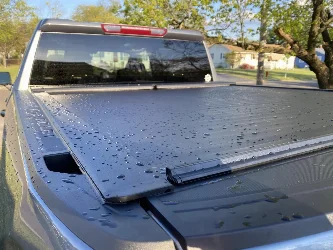
It's Marine Rifleman logic. I carried a personal med kit, but there was always a corpsman around too. I'm not looking to fix my truck in the field as good as new. I'm looking to fix it enough to get to a location where I can fix it as good as new. I was thinking about this yesterday and realized I haven't used 14mm on any part of the truck, except the Retrax tonneau cover. I also haven't used 11mm or 12mm, nor are SAE sizes really used by GM anymore. If I'm playing in dirt I only need to "field fix" the truck enough to get to a tow truck or repair shop. Otherwise, I might as well install a welder on my truck and be like Matt's Off Road Recovery. My trucks personal medical kit should only be for taking care of itself. Btw, a crescent wrench is a good idea, but not always the best tool. You can't really get it into the narrow space for the upper control arm nuts, which are 21mm for the stock hardware or 22mm of you have the ReadyLift upper control arms. I'm not looking to rebuild an engine or transmission on the side of the road.
 
Besides cheap empty ammo cans at the local hardware store I think the VP 5.5 gallon "motorsport liquid" container is my favorite find... I can get all 5 gallons of "motorsport liquid" into my Trail Boss' "motorsport liquid" tank without spilling a drop! And because it's "motorsport liquid" and not fuel, they ship this to CA...:cool:

 
It's Marine Rifleman logic. I carried a personal med kit, but there was always a corpsman around too. I'm not looking to fix my truck in the field as good as new. I'm looking to fix it enough to get to a location where I can fix it as good as new. I was thinking about this yesterday and realized I haven't used 14mm on any part of the truck, except the Retrax tonneau cover. I also haven't used 11mm or 12mm, nor are SAE sizes really used by GM anymore. If I'm playing in dirt I only need to "field fix" the truck enough to get to a tow truck or repair shop. Otherwise, I might as well install a welder on my truck and be like Matt's Off Road Recovery. My trucks personal medical kit should only be for taking care of itself. Btw, a crescent wrench is a good idea, but not always the best tool. You can't really get it into the narrow space for the upper control arm nuts, which are 21mm for the stock hardware or 22mm of you have the ReadyLift upper control arms. I'm not looking to rebuild an engine or transmission on the side of the road.
This is my 6th 4WD vehicle. I 4wheeled all of them. From as small as a 1943 Willeys and Jeep CJ5 to mid size and full size rigs. I don't want to belittle your process here I just disagree. Wheeling a full size rig has advantages and disatvantages. One advantage is the ability to carry what you need. Your going to pack an impact driver, battery, and charger. Then eliminate some of the sockets you may need. I dont get it.

Here is an example of a real life trail repair I made to get off of Fins and Things trail in Moab, UT. Sometimes the things you need are not what you expect. When my differential was bleeding to death on the trail the first thing I grabed was a HATCHET to beat the bent diff cover back in. Then I sealed it with JB Weld. That got me to an auto parts store back in town for more JB Weld. Back to camp for a better field repair and back to finish the trail the next day. I detailed it in this post because it is impoetant to everyone that leaves pavement in a Trail Boss.


Steve
 

Latest Discussions...

Back
Top