What's new

Vehicle recovery gear and tips

Great suggestions.

I think the type of recovery gear taken on any trip is also dependent upon your area. I'm in the piney woods of east Texas where I'm within 100 feet of a pine or oak tree just about anywhere I go, so I have a tree saver, snatch block, multiple soft and hard shackles, extension ropes, etc. that I keep in my truck at all times. Those probably wouldn't do a bit if good in a desert setting though, lol. I also occasionally hit the beach so some of my recovery gear will be similar, if not identical, to the gear mentioned above.

Second, light duty survival gear falls inline with recovery gear for me. If I cant survive the time it takes to be recovered from a situation I cant self extract from, then the recovery gear is useless.

As for my recovery gear, I always have the following with me:
Mounted Winch
Multiple Hard Shackles
Multiple Soft Shackles
Snatch Block
Tree Saver
Kinetic Rope
Traction Boards
WaterPort
Gloves
Square-headed shovel
Hatchet
2 Emergency Medical Aid Kits(store bought)
Viair Air Compressor and Milwaukee Air Compressor
1500 Amp Jump Starter
Multiple tool sets and battery powered impact drivers
Spare belt since my 2020 is on its 3rd belt.
Auxiliary Battery Packs and Adapters for USB charging
Multiple Knives
Duct Tape
Zip Ties
Sanitizer

Items in reserve that I might take depending on where I am going:
Additional set of traction boards
High Lift Jack
Fire Starter and Fire Wood
Roadside Emergency kit including Flares
Spare 12 Volt Battery that I keep around for the Jon Boat

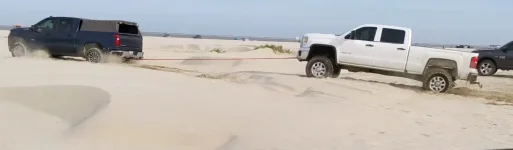
By and large, the absolute best recovery gear purchase I have made is the Treaty Oak Kinetic Rope. There is no better piece of recovery gear in my truck when I am driving in sand. I have pulled out numerous bogged vehicles in sand using the kinetic rope, and have been pulled out myself after helping somebody else. If there is any possibility of using a recovery rope for extraction, I will take it 99 out of 100 times over a winch out. Kinetic Ropes are just too easy and quick with very little stress on your vehicle.

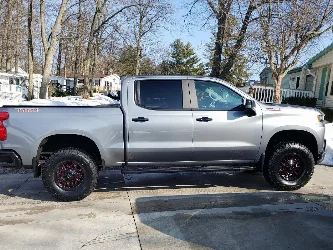
This is me using the kinetic rope to pull out a Silverado 2500 that somehow busted his front axles in sand. I had to tow him at least a half mile in soft sand to get him back to the road. Ideally, towing any distance is not what the rope is designed for, but I didn't have any other straps at the time and it was the only way to get him out of the sandy area after getting him unstuck.
 

Attachments
  • Recovery.webp
    Recovery.webp
    35.6 KB · Views: 97
  • VORR Panel.webp
    VORR Panel.webp
    488.3 KB · Views: 101
Last edited:
Second, light duty survival gear falls inline with recovery gear for me. If I cant survive the time it takes to be recovered from a situation I cant self extract from, then the recovery gear is useless.
I agree with this 100%. My survival bag lives in my truck, it is the one thing I do not take out. I am often in the wilderness alone. When not alone I am responsible for friends and family that dont have my skill set. That is why my kit is so big. If we can't get out I can keep everyone safe and reasonably comfortable.

Spare belt since my 2020 is on its 3rd belt.
This got my attention! Third belt? How many miles? Abnormal wear? Anyone else throwing belts?

Good list. Kinetic ropes and traction boards are both game changers when it comes to recovery. With that said you will still never find me without tool #1......a SHOVEL.

Steve
 
Belt?
That's the engine serpentine belt? huh ... I hadn't thought about that being less than dependable. Thanks!

I recently added a Milwaukee Inflator (compressor) and I really like it. It is the largest, most capable of the three compressors I carry. I haven't Aired Down out on the trails yet, but I have practiced using the Rhino Air Down Valves Kit. Steve says that down to 20 PSI is about as far as we want to go with the stock Wrangler Territory tires and 20 inch wheels.

A 20 ft, 7/8" Kinetic Rope from Murdoch's was the first one I bought. Then added a 30 ft, 1 inch Kinetic Rope. The 1 inch worked very well for the recovery up at the Colorado/Wyoming State line.

The only real problem I am having is constantly having to remove all of the recovery gear mounted semi-permanently in the truck, in order to go and get a firewood. And then having to put it all back in again. We are now burning our SEVENTH truckload of firewood this year. :(
 
I agree with this 100%. My survival bag lives in my truck, it is the one thing I do not take out. I am often in the wilderness alone. When not alone I am responsible for friends and family that dont have my skill set. That is why my kit is so big. If we can't get out I can keep everyone safe and reasonably comfortable.


This got my attention! Third belt? How many miles? Abnormal wear? Anyone else throwing belts?

Good list. Kinetic ropes and traction boards are both game changers when it comes to recovery. With that said you will still never find me without tool #1......a SHOVEL.

Steve
3rd belt, 87k miles. The truck likes to throw them about every 40K but I get a nice, loud, belt squeal on startup for about 5k miles before it lets loose so at least I have some warning . I noticed on this last belt swap that the idler pulley is slightly out of alignment, but GM wont cover it since they consider a belt to be a "wear" item and I didn't bring it in during the warranty phase. Its an irritating situation since it has obviously been this way since day one, but oh well, I would rather not have their technicians touch my truck anyways since it usually gets returned to me with more issues than it went in with. Outside of warranty work, I do all of my own repairs and an idler pulley is a 5 minute job so I'm not too worried.
 
Belt?
That's the engine serpentine belt? huh ... I hadn't thought about that being less than dependable. Thanks!

I recently added a Milwaukee Inflator (compressor) and I really like it. It is the largest, most capable of the three compressors I carry. I haven't Aired Down out on the trails yet, but I have practiced using the Rhino Air Down Valves Kit. Steve says that down to 20 PSI is about as far as we want to go with the stock Wrangler Territory tires and 20 inch wheels.

A 20 ft, 7/8" Kinetic Rope from Murdoch's was the first one I bought. Then added a 30 ft, 1 inch Kinetic Rope. The 1 inch worked very well for the recovery up at the Colorado/Wyoming State line.

The only real problem I am having is constantly having to remove all of the recovery gear mounted semi-permanently in the truck, in order to go and get a firewood. And then having to put it all back in again. We are now burning our SEVENTH truckload of firewood this year. :(
I love kinetic ropes, and if I never have to use a winch again I'm happy with that, lol.

Did you get the M12 or M18 version of the compressor?

I keep two compressors with me when I'm out by myself, a Milwaukee M12 powered compressor and a Viair Compressor. If I'm airing all four tires, the Milwaukee M12 powered compressor (though awesome) takes too much time so I run the Viair and Milwaukee, with the Viair being considerably faster. If its just a single tire that's leaking or low, I really don't want to unpack the Viair, pop the hood, connect to my car battery and run the line, so I hook up the Milwaukee which is much more standalone, and it has been an excellent and reliable pump.

How do you like the Rhino Air Down Valves kit? I have been thinking a lot about getting an air down kit since I do beach runs often enough to warrant it. Are they pretty accurate as far as getting you to a set PSI? I bought an extra set of wheels and tires and use a set of AT4 18's with Duratracs when I know I'm gonna be beach camping or doing a considerable amount of my driving off road, but I've never needed to air them down on the beach. I'm curious if I should air them down anyways just to see if it makes that big of a difference.
 
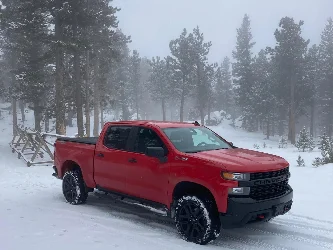
It seems that a critical use of a winch is for self-recovery, when there is no other vehicle to help. In Wyoming, we didn't use a kinetic rope until after we had the stuck vehicle up onto the road. It would have been an Uphill pull with the kinetic, on relatively deep snow.

My CAT brand Starter box has a wimpy, built-in compressor that probably isn't worth much, and I have another that is also very compact.

But the Milwaukee M18 Inflator is quite fast, and as automatic as any other unit. It uses batteries I already have.
Compressor.webp


I think the Rhino Tire Deflators (more properly) are an amazing deal, but that's because ALL Rhino stuff is made in China. These work very well.
Deflators.webp


For the Milwaukee compressor, and all of my other Milwaukee tools, I am just about ready to get this deal for some additional batteries
... if they still offer it.
I carry a charger for Milwaukee batteries, and I have tested using it from the AC electric provided by either my little 200 W Inverter under the center console, or the AC from the CAT brand Starter box.
Batteries.webp

.
 
I use the ARB EZ Deflator. It works ok. It has a built in valve stem remover so it goes pretty fast. Nothing automatic about it. Even though it does one at a time it takes about the same amount of time it takes my friend to air down his Wrangler with 4 of the auto deflaters because of the valve stem.


I air down a lot. The reason the Goodyear Duratracks have such a bad reputation is the weak sidewalls. The low ply rating is not enough for our heavy trucks and the sidewall rubber is poor and they puncture very easily. I have ripped open 4 sidewalls just scrapping rocks. I used to go as low as 20 pounds but now I won't go below 25 lb. Any less than that and sidewalls cant handle it. They bulge and you lose clearance. Since street pressure is 41 going to 25 is a big difference.

I air down for two reasons. The obvious one is to increase the footprint for better off road traction. The second and often overlooked benefit is suspension. Washboard Forest Service type roads beat the hell out of a vehicle. The constant pounding can cause all kinds of problems. So I air down off road even if I am not on terain that requires extra traction. The difference is night and day.

Steve
 
I off road all the time in the great Northeast.. Vermont, Maine, Pennsylvania NJ.. I will take a picture and show all the things I bring with me when I get home this evening.. All great information my friends…
 
I think I'm gonna bite the bullet and get a deflater system now. I've been eyeballing them for sometime now and they are too convenient not to have.

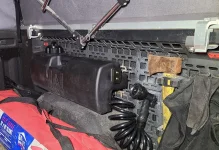
I haven't hooked up a M18 or M12 charger to the bed inverter yet, mainly because I wasn't sure the 400W was enough to allow charging and I was too lazy to actually look into it since I keep a bunch the batteries stacked and charged on my work bench. However, I do have spare chargers so now you have me wondering if the charging stations could endure being mounted to my molle panels in the bed of the truck. If so, that would be a nice addition to the truck bed since I can charge them while driving. I would probably have to install soft rubber bushings between the panel and the charging station to keep it from vibrating to death, but that's easily accomplished.

I wonder if this post should be moved to the new Camping and Overland section 🏕️🔥⛺
 
So one of us is going to have to check the sidewall strength of the Territory tires? These are what my TB has, not the Duratracs.
Perhaps I might do some research at offroad sites and see if there is experience folks have shared.
Also, it might be wise to invest in another Goodyear Wrangler Territory in place of the stock spare tire. It's just that they are rather expensive. :)
 
So one of us is going to have to check the sidewall strength of the Territory tires? These are what my TB has, not the Duratracs.
Perhaps I might do some research at offroad sites and see if there is experience folks have shared.
Also, it might be wise to invest in another Goodyear Wrangler Territory in place of the stock spare tire. It's just that they are rather expensive. :)
I run a full size matching Duratrack for a spare. FYI, to replace the factory temporary spare you also have to buy a wheel because the spare is on a 17 inch wheel.

Steve
 
Wheel size doesn't matter, overall diameter matching is what matters for a spare.
 
Wheel size doesn't matter, overall diameter matching is what matters for a spare.
The factory spare overall diameter is "close" to the Duratrac diameter even though it is on a 17 inch wheel. It is also a POS temporary street spare. I run spares to match what I have on the ground. It is not unusual for me to be 75 miles or more into backcountry. If I 4wheel to get in I need 4wheel to get out. I am not going to tear up a differential or other gearing running a mismatched junk factory spare.

My duratracks have been a nightmare. This is my 6th 4WD vehicle. I have had very few tire issuses in the past. Just stuff I would expect from so many miles off road. In two years I have ripped the sidewall open 4 times on the Duracraps. For now I am stuck with them because I have road hazard on them so they keep getting replaced. Part of my off road kit includes tire repair plug kits and sidewall patches. I never needed any of it until Duracraps. Now it has saved me.

Steve
 
Some research done, it seems there may be several differences between Duratrac and Territory tires in the "Wrangler family" of tires.

For the Territory, "The Goodyear Wrangler Territory MT also improves load durability. The stronger internal structure does not allow the tire to deform under the load and driving pressure. As the tire does not deform, it is able to upgrade the load capacity throughout the performance."

Wrangler Territory are Load Range "C" and Load Index 110/107 per Goodyear specs.
These may be able to tolerate Airing Down to as little as 12 PSI.
However, because the tire does not deform, performance when aired down may be difficult to predict. But in my tests airing down to 20 PSI the tire sidewalls did in fact deform just as one would expect them to, and just as we want them to for off road traction.

Airing Down is discussed in this article:

I recently bought tires for my Corvette from Priority Tire, and this is the best price I've seen for the same OEM tires that my TB wears:

If I were to purchase new tires, or a replacement spare, the following are very attractive ... the new Kevlar Wrangler All-Terrain:

These are much stronger, apparently, and they have the three-peak Snow Performance rating.
 
Last edited:

Latest Discussions...

Back
Top